
Smart Hands in South Africa: Why Remote Eyes and Hands Support Is Now Mission Critical
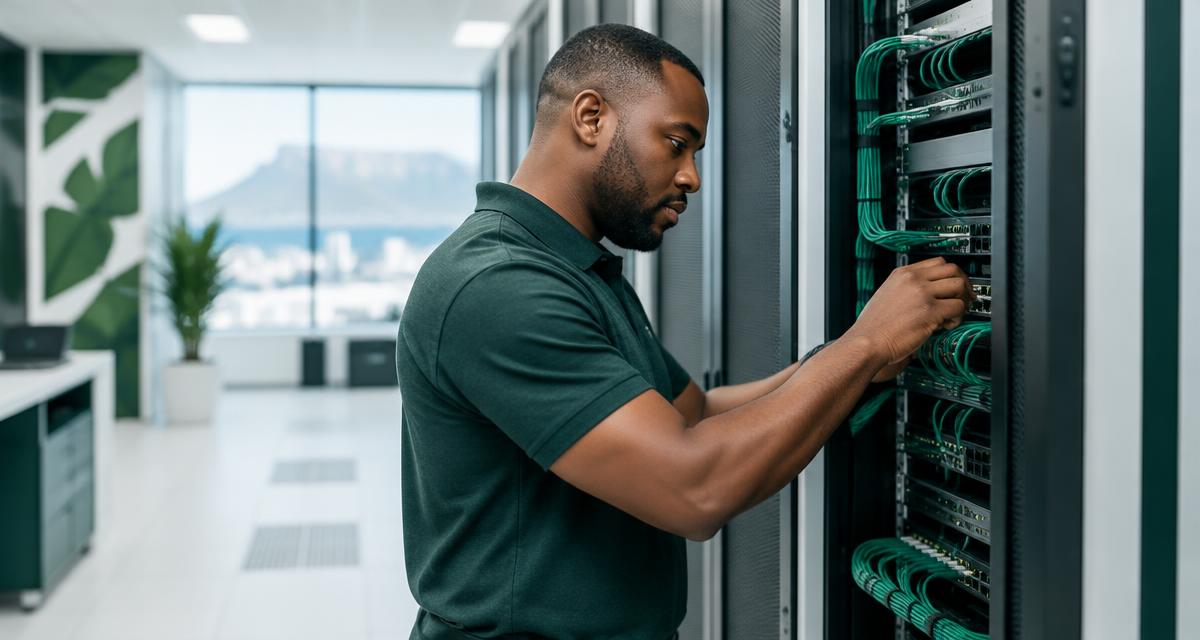
A failed switch in Polokwane does not care that your network engineer sits in Sandton. Every hour a site waits for someone to physically touch the hardware is an hour of lost revenue, and in South Africa distance is the single biggest tax on uptime.
That is why Smart Hands, trained technicians dispatched to site on your behalf, has moved from a nice-to-have into a core part of how South African IT teams keep infrastructure running.
Why remote support alone runs out of road
Remote management solves configuration problems. It does not solve physical ones, and the physical layer is where most branch outages actually begin.
- Hardware does not respond to SSH: A dead power supply, an unseated SFP, a patch lead knocked loose by a cleaner. None of these clear from a remote session.
- Travel cost compounds fast: Flying an engineer from Gauteng to a Free State branch for a 20 minute fix burns a full day of senior time plus flights, car hire and accommodation.
- Sites are getting more remote: Retail, mining, logistics and agriculture keep pushing connected equipment further away from head office, into places with no on-site IT at all.
What good Smart Hands actually covers
The value is not simply a body on site. It is a technician who arrives with the right tooling, follows your runbook, and reports back in a form your team can act on.
- Rack and stack: Mounting, cabling and labelling new equipment so your remote configuration lands on a clean, documented physical layer.
- Break-fix swaps: Replacing failed switches, routers, firewalls, optics, UPS units and patch leads under your supervision.
- Diagnostics and eyes on site: Photographs, link light status, cable trace results and load-shedding damage assessments fed straight back to your NOC.
- Scheduled hygiene: Cable tidy-ups, airflow checks, firmware media swaps and inventory audits done during planned windows instead of emergencies.
Load shedding changed the maths
Repeated power cycling is brutal on branch hardware. UPS batteries degrade, switches fail on restart, and equipment that survived years of stable power now fails in clusters. Teams that once needed a site visit twice a year now need one every quarter.
A standing Smart Hands arrangement absorbs that volume without you hiring regional staff you cannot keep busy the rest of the year.
Three questions to ask any Smart Hands provider
- 1
Where are your technicians actually based?
National coverage means little if every dispatch starts in Johannesburg. Ask for the province-by-province list and the honest response time from each base.
- 2
Who signs off on the work?
You want named technicians, documented procedures, photographic proof of work and a ticket trail you can audit later, not a verbal all done.
- 3
How do you handle after-hours and escalation?
Most branch work has to happen outside trading hours. Confirm night and weekend rates upfront, along with the escalation path when a swap does not resolve the fault.
How 2bo runs Smart Hands
We keep vetted technicians across all nine provinces, dispatch against your runbook, and close every job with photographic evidence and a written report. Your engineers stay focused on architecture while we handle the physical layer wherever it lives.
Need technicians on site, nationwide?
Talk to the 2bo Smart Hands team about coverage, response times and standing dispatch arrangements for your branch network.